One Palette, Every Room: Building a Colour Story That Carries Through Your Whole House
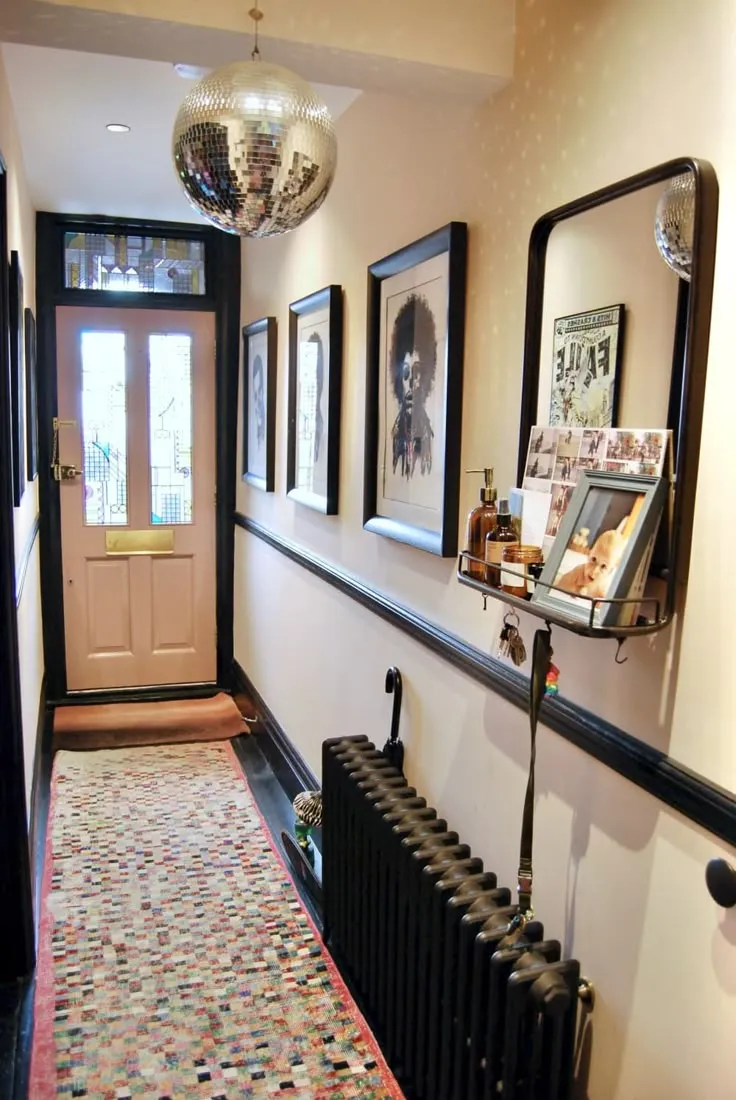
Photo: colourful painted hallway interior UK terraced house, via i.pinimg.com
Stand in your hallway for a moment. Now imagine walking from there, through the sitting room, into the kitchen, up the stairs and into the main bedroom. Does the journey feel like one continuous conversation — or does each room interrupt the last like a different person butting into the chat?
That's the difference between a house with a colour story and a house with a collection of rooms. And the good news is that a cohesive palette is far easier to engineer than most people assume. You don't need to paint everything the same shade of greige. You need a plan.
Start With One Anchor, Not Ten Favourites
The most common mistake we see is homeowners falling in love with several unrelated colours and trying to give each one a room. The result is a house that feels like a B&B with strong opinions.
Instead, choose a single anchor colour — usually a neutral that suits your fixed elements. Look at what you can't change cheaply: the kitchen units, the fireplace, the flooring, the view from the back doors. A warm oak floor pulls you towards creams, clays and olive greens; a cool grey composite worktop leans you towards blues, slate and crisp whites.
Your anchor should appear in some form in every room — even if it's just in the woodwork, a lampshade or a rug. That repetition is the invisible thread.
The 60-30-10 Rule, Stretched Across a Floor Plan
You've probably heard of 60-30-10 for a single room: dominant, secondary, accent. For a whole house, apply it in layers:
- 60% — your base neutrals. Walls, woodwork, large sofas, curtains. These can shift slightly room to room (a warm white upstairs, a soft putty downstairs) but should sit in the same temperature family.
- 30% — your secondary tones. Two or three colours drawn from the same natural reference point — say, the greens and ochres of the Chilterns in autumn, or the greys and blues of a Cornish harbour.
- 10% — your accent. One confident colour, used sparingly but deliberately. This is what makes the scheme feel designed rather than default.
The accent is your connective tissue. If it shows up in the hallway mirror frame, the kitchen bar stools and the bedroom cushion covers, the eye reads continuity even when the wall colours differ.
Work With Your Light, Not Against It
Here's where UK homes get tricky: our light changes dramatically depending on which way a room faces, and a colour that sings in a south-facing kitchen can go murky in a north-facing snug.
North-facing rooms receive cool, indirect light all day. Warm your palette up here — creams with yellow undertones, terracotta, muted pinks, warm woods. Avoid anything with a strong grey base; it will read flat and slightly damp.
South-facing rooms can handle the cooler and deeper end — sage, eucalyptus, slate blue, even a rich inky navy on a feature wall. The light will keep them lively.
East-facing rooms get glorious morning light and gloomy afternoons, so pick colours that behave in both: layered neutrals with texture doing the heavy lifting.
West-facing rooms glow in the evening — perfect for dining spaces and sitting rooms where you want warmth at the end of the day. Amber, rust and deep greens thrive here.
A practical trick: paint your candidates onto large sheets of lining paper and move them around the house for a full week. Watch them at 8am and at dusk. Colours are shapeshifters, and the cheap test now saves an expensive repaint later.
Repeat, Don't Match
The difference between coordinated and matchy-matchy comes down to variation in scale and material. Repeat your accent colour, but change its form each time: glazed ceramic in the hall, linen in the living room, painted MDF on the bedroom wardrobe. Repeat your secondary green, but shift the shade slightly — a deeper forest upstairs, a silvery sage down.
Materials matter as much as paint. Rattan, brass, blackened steel, unbleached cotton — when the same material finishes recur through the house, rooms that differ in colour still feel like family.
A Formula You Can Apply This Weekend
Grab your floor plan and a pencil:
- List your fixed elements — floors, tiles, big furniture you're keeping.
- Pick one anchor neutral that flatters all of them.
- Choose two secondary colours from one natural inspiration (a landscape photo works brilliantly — pin it to the fridge as your reference).
- Commit to one accent, and note three places it will appear on each floor.
- Walk the plan room by room and check: does each space contain the anchor, at least one secondary, and a whisper of the accent? If a room fails the test, it doesn't need repainting — it usually just needs one textile swap.
Do this before you buy a single tin of paint, and you'll never again stand in a DIY aisle paralysed by four near-identical whites.
The Hallway Test
Finally, a simple quality check. Stand at your front door, then walk the house at a normal pace. If, at every threshold, something in the next room visibly answers something behind you — a colour, a wood tone, a metal — your palette is working. If any doorway feels like stepping into a different house, you've found your next project.
A whole-home colour story isn't about restriction. It's about giving yourself a language, then speaking it with a different accent in every room.